If you’ve been doing SEO for any length of time, you already know that backlinks matter. Getting them, however, is the hard part. Most outreach gets ignored, guest post opportunities are saturated, and buying links is a risk no one wants to take.
That’s why broken link building remains one of the most reliable tactics in the SEO playbook. It’s not a new concept, but when done right, it delivers real results. You help a webmaster fix a dead link (a 404 error) on their site, and in return you earn a high-quality, editorial backlink, a genuine win-win for both sides.
In this guide, we’ll walk you through broken link building step by step from finding the right opportunities to writing outreach emails that actually get replies.
What Is Broken Link Building and Why Does It Work?
Broken link building is the process of finding dead links on other websites, creating content that can replace the linked resource, and reaching out to site owners with your replacement suggestion.
Every time a page gets deleted or moved without a proper redirect, a broken link is born. Visitors hit a dead end. The Crawl budget gets wasted. And the webmaster looks bad in front of both users and search engines often without even knowing it.
That’s your opening. You’re not asking for a link out of nowhere. You’re doing someone a favour first, and your replacement content is the solution they didn’t know they needed.
The data backs this up:
- Pages ranking in the top position on Google have 3.8 times more backlinks than pages ranking in positions two through ten.
- Resource pages are among the richest sources of broken link opportunities because they link to dozens of external sites and are rarely updated.
- Most webmasters are unaware of broken links on their own site making them genuinely open to a helpful heads-up.
Step 1: Find Broken Link Opportunities
Building a strong prospect list is your starting point. Here are the most reliable methods.
Analyze Competitor Backlinks for Broken Link Opportunities
Start with your competitors. If a site is willing to link to your competitor, they’re likely willing to link to you as well. Tools like Ahrefs and Semrush let you filter a competitor’s backlink profile to show only links pointing to 404 pages; these dead pages are your golden targets.
Start by identifying two or three direct competitors, pull their backlink reports, filter for broken pages, and export the results to build your prospect list.
Target Resource Pages
Resource pages are some of the best places to find broken links. These are pages that exist purely to link out to helpful resources on a given topic. Because they link to so many external sites, they tend to accumulate dead links over time.
Use Google search operators to find these pages in your niche. Try: ‘keyword + useful resources’, ‘keyword + helpful links’, or ‘keyword + recommended sites’. Then use a browser extension like Check My Links to quickly scan for broken links on those pages.
Scale Your Research with Screaming Frog or Ahrefs Site Audit
To scale your prospecting, use a crawling tool that saves hours of manual checking. Screaming Frog can crawl a list of URLs and flag any outbound links that return 4xx status codes. Ahrefs Site Audit performs the same function with a more streamlined workflow and deeper filtering options. Either way, you end up with a targeted list of broken link opportunities you can act on.

Here’s a quick comparison of the most effective tools for this strategy:
| Tool | Best Use | Cost | Skill Level | Broken Link Feature |
| Ahrefs | Competitor backlink analysis & site audit | From $29/month | Intermediate | Site Explorer > Broken Backlinks |
| Semrush | Full backlink audits & outreach workflow | From $139/month | Intermediate | Backlink Analytics > Broken Pages |
| Screaming Frog | Bulk crawl for broken outbound links | Free (500 URLs) | Beginner | Configuration > External Links |
| Check My Links | Quick manual page checks (Chrome extension) | Free | Beginner | Auto-highlights broken links |
| Wayback Machine | View original content of dead pages | Free | Beginner | Enter dead URL directly |
| Hunter.io | Find contact emails for outreach | Free tier available | Beginner | Domain Search |
Step 2: Evaluate Your Opportunities
Not every broken link is worth pursuing. Before investing time on content or outreach, take a moment to evaluate each prospect carefully.
Here’s what to evaluate:
- Domain Authority (DA): Focus on sites with a DA above 40 DA is a Moz metric that estimates a site’s ranking strength. Higher authority links carry more SEO weight.
- Topical Relevance: The linking site should be related to your niche. A backlink from an irrelevant site adds little value and can appear unnatural to Google’s link evaluation systems.
- Number of Referring Domains: Check how many sites are linking to the broken page using Ahrefs Site Explorer or Semrush’s Backlink Analytics. More referring domains means more potential backlinks from a single piece of content.
- Content Match: Ask yourself honestly, does my content serve the same purpose as the page that disappeared? If the answer is no, don’t bother reaching out. Site owners will only update a link if your content makes sense as a replacement for their readers.
Carefully targeted campaigns consistently outperform generic mass-outreach by a wide margin. Quality always beats quantity here.
Step 3: Create Replacement Content
Once you’ve identified your target broken link, your next job is to create something worth linking to. This step determines whether your outreach succeeds or fails.
Go to the Wayback Machine and enter the dead URL. This reveals the original page’s content, format, and intent so your replacement matches what site owners expect. Then build something better, more accurate, more current, and more useful.
Better doesn’t just mean longer. It means more accurate, more up-to-date, more visual, and more useful. Update any outdated statistics, add visuals like images or charts, and make it genuinely easier to read.
What content format works best?
Match the original format as closely as possible:
- If the dead page was a comprehensive guide: write a better, updated guide
- If it was a statistics page: create a fresh, sourced data roundup
- If it was an infographic: design a modern, updated version
- If it was a resource list: build a more complete, current version
Think about it from the site owner’s perspective. They may need to justify that update to their editor or team. Your content needs to make that decision obvious. If your content is clearly the best available resource on that topic, the decision is easy for them.
Step 4: Write Outreach Emails That Get Replies
Outreach is where most broken link building campaigns succeed or fail. You can find perfect opportunities and create great content, but if your outreach email gets ignored, none of it matters.
Industry data suggests the average cold outreach response rate is under 10%. Personalized campaigns consistently outperform generic ones by a significant margin. The difference is entirely in how you write the email.
What Makes a Good Outreach Email
- Use their name: Never use ‘Dear Webmaster’ personalization signals that you’ve actually read their site.
- Be specific: Mention the exact URL where you found the broken link and what it was supposed to link to.
- Lead with value: Inform them about the broken link first frame it as a helpful heads-up, not a pitch. Then introduce your replacement.
- Keep it short: Webmasters are busy people. A long, rambling email signals more work for them and they’ll move on. Stick to three to four clear sentences, get straight to the point, and respect their time.
- Follow up once: If you don’t hear back in five to seven days, send one polite follow-up. Just one multiple follow-ups can trigger spam filters and hurt your domain’s sender reputation.
Subject line examples:
- Something’s not working on [page title]
- Found something on [page name] you might want to fix
Example outreach email:
Hi [Name],
I was reading your article on [topic] and noticed one of the links is broken. It’s pointing to [dead URL], which now returns a 404.
I recently published a guide on the same topic that could work as a replacement: [your URL]. I hope it helps!
[Your name]
Personalized outreach consistently outperforms generic templates that take the extra few minutes to customize each email.
Step 5: Track Your Results and Improve
Once your outreach is running, track what’s working and what isn’t that feedback loop is how you improve over time.
Track these four key metrics:
- Response Rate: What percentage of emails get a reply? (Benchmark: under 10% industry average; personalized campaigns can reach 20-25%.)
- Placement Rate: How many replies convert to a live backlink? Track this separately and it shows the quality of your content and targeting.
- Domain Authority of Acquired Links: Are you building links from high-authority sites? Use DA 40+ as your minimum threshold.
- Referral Traffic: Are people actually clicking through from the new backlinks?
As a general benchmark, targeting 150 quality prospects can yield roughly 8 to 12 new backlinks though results vary by niche and content quality. The typical time investment runs 20 to 25 hours from research through outreach follow-up. At that scale, the cost per link is often significantly lower than paid guest posts, which commonly run $100–$500+ per placement.
Advanced Tactics to Multiply Your Results
Once you’ve mastered the core process, these advanced approaches can significantly multiply your results.
The Moving Man Method
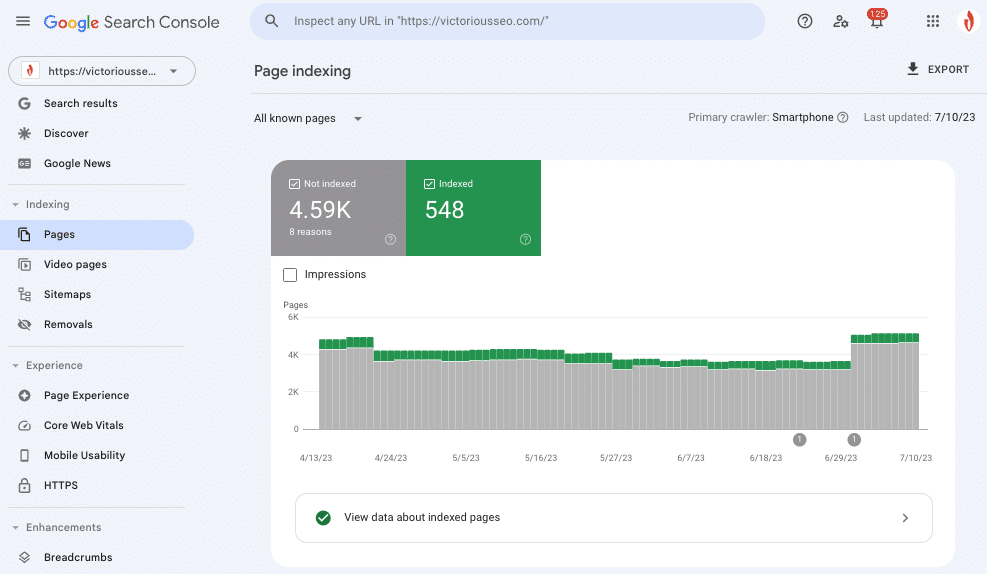
When a company rebrands, merges, or shuts down, it leaves broken links scattered across the internet. This concept, popularized by Brian Dean of Backlinko, is called The Moving Man Method. Monitor your niche for rebrandings and shutdowns using Google Alerts or Ahrefs Alerts. Then use Ahrefs Site Explorer to find all sites pointing to the old URL, and reach out with your replacement.
This is one of the fastest ways to build links at scale.
Broken Resource Page Hijacking
Instead of targeting one broken link at a time, look for entire resource pages that are outdated or abandoned. Create a comprehensive, updated version of the resource and reach out to everyone who linked to the old page find them all by checking the dead page’s backlink profile in Ahrefs. This approach can generate multiple backlinks from a single content asset.
Scholarship Link Reclamation
Many .edu websites maintain scholarship directories that link to external scholarship pages and many of those links are broken. These .edu backlinks carry significant authority and trust signals they’re among the hardest to earn through any other method.
Create a genuine scholarship page on your site and reach out to universities whose scholarship links are pointing to dead pages. Note: this must be a real scholarship offering, not a placeholder page. Education-sector links carry substantial authority and are worth the extra effort.
Frequently Asked Questions
How long does broken link building take to show results?
Most campaigns take four to six weeks from start to finish, including research, content creation, and outreach. You may see backlinks appear within a few days of successful outreach, but the impact on your rankings typically becomes visible over two to three months.
Is broken link building still effective in 2026?
Yes. Google consistently values editorial links earned through genuine value exchange exactly what broken link building delivers. It remains one of the most reliable white-hat link building tactics available.
What tools do I need to get started?
You can start with free tools like Check My Links and the Wayback Machine. For scaling, Ahrefs or Semrush are the most commonly used paid options. Hunter.io is useful for finding contact emails during outreach.
How many prospects should I target per campaign?
A good starting point is 100 to 150 prospects per campaign. This gives you enough volume to expect 8 to 12 links while keeping the workload manageable. As you refine your process, you can scale up gradually.
What if the site owner does not respond?
If you don’t hear back, send one follow-up email after five to seven days. That’s it. Sending multiple follow-ups to the same person won’t help it will only hurt your sender reputation and increase the risk of your domain getting flagged as spam.
What kind of content works best as a replacement?
Comprehensive guides, data-driven articles, updated statistics pages, and visual resources like infographics tend to perform best. The most important factor is intent matching your replacement must serve the exact same purpose the original page served.
How do I find the right person to contact?
Use Hunter.io to find email addresses associated with a domain. Check the site’s About or Team page for editorial staff names. Look at the author byline on the specific page containing the broken link that author may still be reachable. Always contact a specific person rather than a generic info@ or contact@ address.
What is the difference between broken link building and link reclamation?
Broken link building means finding dead links on other websites and offering your content as a replacement. Link reclamation means recovering links that already pointed to your site but are now broken or unlinked. Both are valuable but they are different processes targeting different problems.
Final Thoughts
Broken link building isn’t a shortcut or a hack. It’s a legitimate, relationship-based SEO strategy that takes real effort to execute well. But the results are worth it.
Every broken link you turn into a live backlink is an editorial vote of authority — one that compounds as your profile grows. The formula is straightforward: find relevant broken links, create content that replaces them, and reach out with a personalized, helpful message. Track your results, refine your approach, and keep building.
Done consistently, broken link building is one of the few link acquisition strategies that builds lasting authority not just temporary ranking boosts.
Why Rankvialinks Is Your Ideal Partner for Link Building
If you want to take broken link building seriously but don’t have the time to manage it yourself, Rankvialinks is here to help. We specialize in white-hat link building strategies that drive measurable, lasting SEO results. Our team handles everything from opportunity research and content creation to personalized outreach and follow-up.
Whether you’re a growing business or an established brand, Rankvialinks has the expertise and systems to build your backlink profile the right way. We focus on quality over quantity, targeting high-authority, topically relevant sites that move the needle for your rankings.
Visit Rankvialinks.com today for a free consultation and start building the backlinks your competitors wish they had.
Recommended Articles:
How Link Building Strategies Are Effective For SEO?
Why Some Backlinks Get Ignored by Googlebot (And How to Fix It)
How to Build Backlinks for a Local Business Website: A Comprehensive Guide
How to Find Unlinked Brand Mentions and Turn Them Into Backlinks