How to Find Unlinked Brand Mentions and Turn Them Into Backlinks
They are writing blog posts, publishing reviews, and creating resource pages. And in many of those pieces, your brand name is sitting there, plain text...

People are talking about your brand right now.
They are writing blog posts, publishing reviews, and creating resource pages. And in many of those pieces, your brand name is sitting there, plain text, with no link attached.
That is an unlinked brand mention. And it is one of the easiest backlink opportunities you will ever get.
This guide will show you exactly how to find unlinked brand mentions and turn them into backlinks, step by step.
What Is an Unlinked Brand Mention?
An unlinked brand mention happens when a website writes your brand name, product name, or even your CEO's name in their content, but does not hyperlink it back to your website.
Think of it this way. Someone spent time writing about you. They already trust you enough to refer you. The only thing missing is the link.

According to uSERP's 2024 State of Backlinks Report, unlinked mention conversion ranks as the fourth most commonly used link-building tactic, tied with link insertions and exchanges. That tells you a lot about how seriously SEOs take this strategy.
Why Should You Care?
Backlinks remain one of the top ranking signals in Google's algorithm. But earning them through cold outreach is hard. Converting an unlinked mention is far easier because the relationship already exists.
The site already knows you. They already mentioned you. You are not asking them to do something new. You are simply asking them to complete what they already started.
Hunter, the email outreach tool, discovered that over 18,000 sites had mentioned their brand without adding a backlink. After reaching out, they reclaimed 53 high-authority backlinks in just three months. That is the kind of return that makes this strategy worth your time.
And here is a stat that really matters. According to Ahrefs, brand mentions show the strongest correlation (0.664) with search visibility, even before a link is added. Once you convert them into actual backlinks, the SEO value climbs even higher.
Step 1: Know What to Monitor
Before you start searching, get clear on what terms you want to track. Your brand name is just the beginning.
Here is what you should be monitoring:
Brand Variations: Your full company name, shortened versions, common misspellings, and abbreviations.
Product or Service Names: Any specific product, tool, or service your company offers.
Key People: Your CEO, founders, or well-known spokespeople.
Slogans and Taglines: Any phrase closely associated with your brand.
Branded Research or Data: If you have published original statistics or studies, people may cite them without linking back.
The more terms you monitor, the more opportunities you will find
Step 2: Find the Unlinked Mentions
There are several ways to do this. Some are free. Some are paid. You do not need all of them. Pick the one that fits your workflow.
Google Search Operators (Free)
Start with a simple search. Type this into Google:
"your brand name" -site:yourwebsite.com
This pulls up pages that mention your brand but exclude your own site. You can also use the intext: operator for more precise results.
The downside is that you have to manually check each result to see whether a link exists. It is slow, but it works for getting started.
Google Alerts (Free)
Go to Google Alerts and set up notifications for your brand name and key variations. Every time a new page mentions your brand, you get an email.
This is a passive approach. You are not finding old mentions. You are catching new ones as they happen. That matters because fresh pages are easier to update.
Ahrefs Content Explorer (Paid)
Type your brand name into Ahrefs Content Explorer. Then filter results to exclude pages that already link to your site. What you are left with is a list of pages that mention you without linking.
You can sort by Domain Rating to prioritize the highest-value opportunities. This is the fastest method for established brands.
SEMrush Brand Monitoring Tool (Paid)
SEMrush has a dedicated Brand Monitoring tool that tracks mentions across news, blogs, and web content. Each result comes with an Authority Score so you can immediately see which mentions are worth pursuing.
Talkwalker and Brand24 (Paid)
These are media monitoring tools that track mentions across social media, forums, news sites, and blogs in real time. They are particularly useful if your brand gets a high volume of coverage and you need to filter at scale.
Step 3: Qualify Your Opportunities
Not every unlinked mention is worth chasing. Before you reach out, filter your list.
Check Domain Authority: Prioritize sites with higher domain authority. A backlink from a high-DA site carries significantly more weight than one from a low-traffic blog.
Check Relevance: Is the site related to your industry? A relevant backlink is more valuable than a random one, even if the random one has higher authority.
Check Page Traffic: A mention on a page that gets actual visitors is worth more than one buried on a page nobody reads.
Check Whether Links Are Even Allowed: Some sites publish editorial policies where they do not link out to external sites at all. If a page has no outbound links whatsoever, skip it. Asking will likely go nowhere.
Focus on Fresh Mentions First: A page published last week is far easier to update than one from three years ago. The author is still engaged with the content and is more likely to respond.
Step 4: Find the Right Contact
Once you have your target list, you need to find the right person to email.
Start with the author. Most blog posts list the author's name. Search for that person on LinkedIn or look for their email on the site.
If the author is unavailable, look for the editor or content manager. Tools like Hunter.io can help you find verified email addresses for any domain.
When in doubt, use the site's general contact form. It is not ideal, but it still works.
Step 5: Write the Outreach Email
This is where most people go wrong. They write generic emails. They sound desperate. They get ignored.
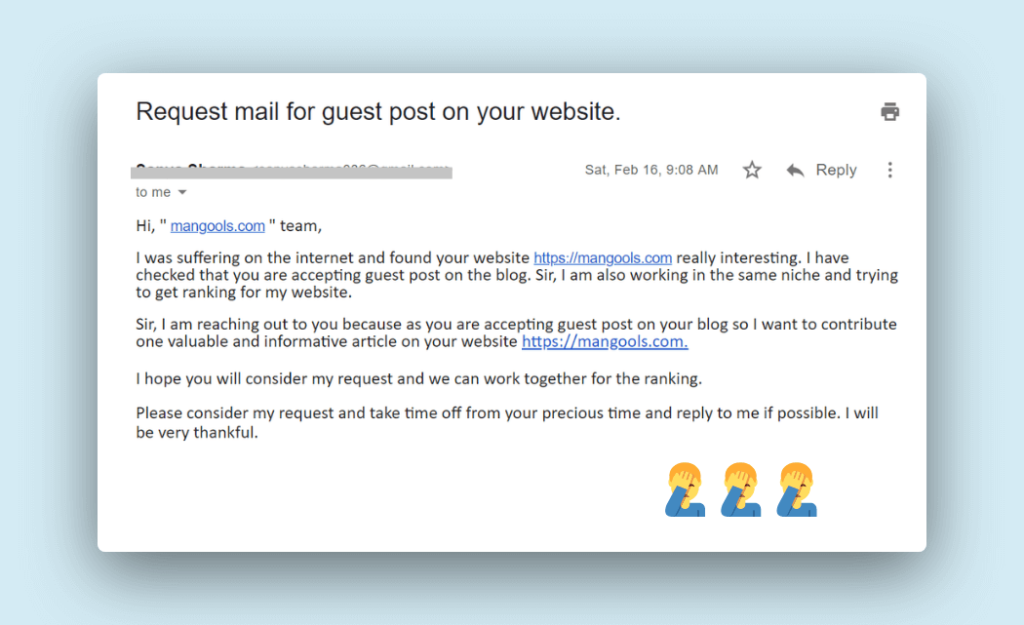
Your outreach email needs to do three things. It needs to be personal. It needs to be brief. And it needs to explain the value for them, not just for you.
Here is a structure that works:
Subject Line: Quick question about your [article title]
Body:
Hi [rankvialinks],
I was reading your piece on [specific article topic] and noticed you mentioned [rankvialinks] in the section about [specific context].
I just wanted to reach out and say the mention was a nice touch. I also wanted to check if you would be open to adding a link to [specific URL] where you mention us. It would give your readers a direct way to explore what you referenced.
Either way, great article. Keep up the good work.
[Your Name]
That is it. Short. Specific. Low pressure.
Follow up once or twice if you do not hear back. Space your follow-ups about three to five days apart. Do not send more than three emails total.
Step 6: Track Your Results
Keep a simple spreadsheet. Log the URL of each mention, the site's domain authority, the date you reached out, and whether the link was added.
Over time, you will start to see patterns. Certain types of sites respond better. Certain outreach angles work better. That data makes your next campaign more effective.
Hunter tracked their campaign for three full months before analyzing what worked. That kind of patience pays off.
How RankViaLink Can Help You Scale This
Finding and converting unlinked mentions sounds straightforward. But when you are managing multiple campaigns, it eats up a lot of time.
At RankViaLink, we handle this process end-to-end. We identify your unlinked mention opportunities, qualify them by authority and relevance, craft personalized outreach emails, and manage the follow-up. Our clients consistently convert unlinked mentions into high-authority backlinks without spending hours doing it manually. If you want a smarter, faster way to build links, RankViaLink is built for exactly that.
Statistical Snapshot: Why This Strategy Works
- Brand mentions have a 0.664 correlation with search visibility, the highest of any off-page factor, according to Ahrefs.
- Unlinked mention conversion is the fourth most common link building tactic used by SEO professionals in 2024.
- Hunter reclaimed 53 backlinks from high-authority sites in three months using this exact method.
- Backlinko has over 568,000 unlinked mentions across the web, representing a massive pool of untapped link building potential.
- Brands monitoring mentions in real time have significantly higher conversion rates because they reach out while pages are still fresh.
Frequently Asked Questions
Q How do I know if a mention is worth pursuing?
Check the site's domain authority, its relevance to your niche, and the traffic the page receives. Also, confirm that the site actually links out to external pages before reaching out.
Q What should I say in my outreach email?
Keep it short, personal, and focused on the value to their readers. Mention the specific article, the context of the mention, and provide the exact URL you want linked. Avoid being pushy.
Q How long does it take to see results?
Most responses come within five to ten business days if you follow up correctly. A consistent three-month campaign is a reasonable timeframe to measure meaningful results.
Q Is this considered white-hat link building?
Yes. You are not buying links or manipulating rankings. You are simply asking a site to update an existing mention with a link. It is fully within Google's guidelines.
Q What if the site refuses to add a link?
That is fine. Some editors have policies against external links. Thank them for their time and move on. Not every opportunity will convert, and that is normal.
Conclusion:
Unlinked brand mentions are backlinks waiting to happen.
Someone already wrote about you. They already trust you. All you need to do is ask for the link.
Start simple. Set up a Google Alert today. Run one brand search. Find your first three opportunities and reach out this week.
You do not need a big budget or a complex strategy to begin. You just need consistency.
The brands that win at SEO are the ones that act on opportunities others ignore. Unlinked mentions are exactly that.
The links are out there. Go claim them.
Recommended Articles:
How Google Updates Affect Your Website Ranking
How to Grow Website Reputation in Google Search – How to Earn Trust in Google Search!
Attracting Backlinks through Content Marketing – Proven Strategies!
How to Get High DA Backlinks for Free: Improve the Ranking of Your Website
How to Get Guest Post Backlinks for Your Website – Not Any Spam


