What Is the Role of Backlinks in Google Core Updates?
What is the role of backlinks in Google core updates? See how relevant, trusted links support rankings, authority, and long term SEO...

If you are wondering what the role of backlinks in Google core updates is, the simple answer is this: backlinks still matter, but Google now cares far more about quality, relevance, trust, and natural linking patterns than raw numbers. Core updates are designed to improve helpful and reliable results, so backlinks work best when they support useful content, real expertise, and a trustworthy website.
Do Backlinks Still Matter in Google Core Updates?
This query arises each time rankings shift following a significant Google revamp. It is alleged that backlinks are becoming useless. Some others take links as the most significant aspect of SEO. The reality lies in between.
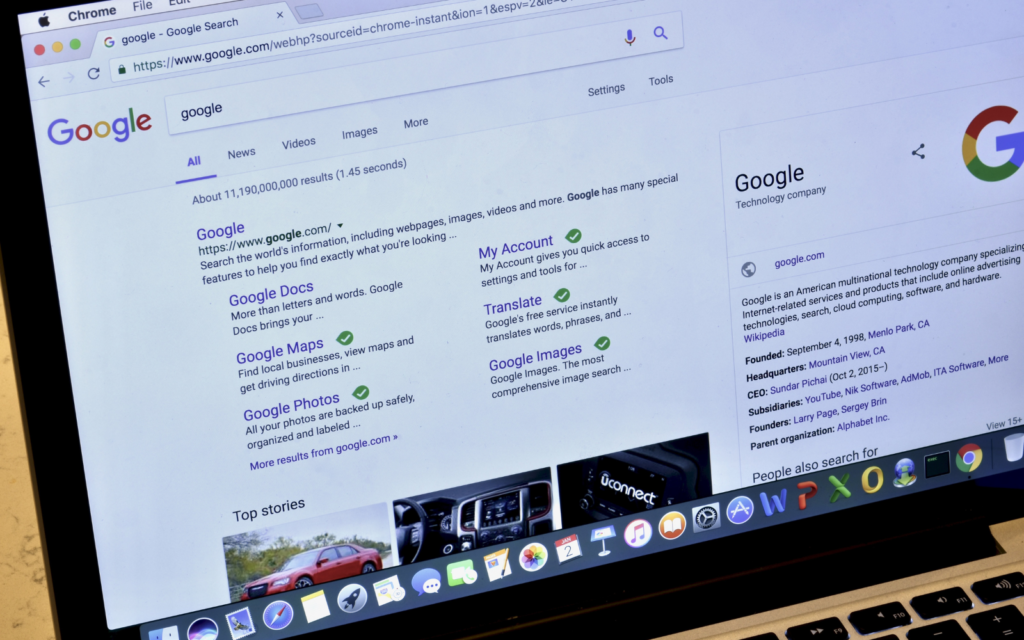
Google has made it clear that page rank and link analysis systems are part of its ranking systems. It implies that backlinks continue to benefit Google in comprehending authority and trust. Concurrently, Google core updates are developed to present more helpful, trustworthy, and people oriented content. Backlinks will no longer suffice all by themselves. They endorse rankings, yet they do not substitute the area of content, the significance of customers, and topical credibility.
What Are Google Core Updates?
Google core updates are widespread alterations of Google Search ranking frameworks. They are not fines directed towards a specific site or a niche. As an alternative, they are enhancements that are supposed to enable Google to record better results. With a core update in place, there are those websites that rise, others fall and most remain as they are.
That is why site owners can be confused most of the time. A ranking decay among core updates does not necessarily imply that your site did anything wrong. It could be nothing more than making other pages seem more useful, relevant or trustworthy than otherwise. The philosophy of Google about core updates pay much attention to the quality, reliability, and usefulness of the content to actual users.
Why Backlinks Still Matter to Google
The importance of backlinks remains since they serve as a sort of recognition by other websites. When a trustworthy website links to your site, it won't lack a reason to have faith in your content.
Google continues to utilize PageRank and link analysis systems, which validates the fact that a system of links is still involved in ranking. This is important as there are individuals who believe that modern SEO all about content. Central position to content, of course, but links are also useful, as they can make search engines expect those pages to have more significant popularity.
One need not look much farther than this:
- Content informs Google of what your page is about.
- Backlinks aid Google in determining the amount of trust and authority that your page has.
- Relevance assists Google to determine the location of your page.
This is the reason why backlinks continue to feature in intensive conversations about SEO, particularly in the post-core updates era.
How Google Uses Backlinks as Trust and Authority Signals
Not any links are called backlinks. Google contextually reads them. It examines their origin, their natural appearance, and their appropriateness to the subject.
To illustrate this the more respectable a marketing site is and the more it denotes your SEO research article the more it means. Similarly, a single good editorial mention is better than dozens of weak links, created solely to rank.

Trust is also an important element at Google regarding the helpful content and E E A T. Although E E A T is not one ranking factor, Google claims that the most important aspect of the same is trust. Also, the trust can be backed with the help of pertinent and reliable sources whose backlinks will prove that other experts in the sphere are aware of your work.
Although many SEO experts call backlinks votes in a race of simple popularities, they are not. They are more apprehended as a mark of editorial confidence.
The Shift from Link Quantity to Link Quality
A few years ago, there were lots of sites with huge numbers of backlinks that were of low value. The latter strategy is far weaker nowadays. Google has improved its level of negligence on the aspect of ignoring the manipulative links as well as recognizing spam.
The contemporary core updates are rewarded on quality rather than quantity. The ideal backlinks would tend to be:
- Applicable to your niche.
- Annotated as part of useful material.
- Obtained on reputable sites.
- With the help of robust content on the connected page.
Google guidance supports this shift, as does industry research. It was discovered that content receives no external links 94 percent of the time, and the true rates of link earning are very sparse. The same study revealed that a negligible percentage of content (2.2%) receives links across two or more sites. That is, real backlinks remain strong since they can be difficult to gain.
Contextual Relevance: Why Niche Backlinks Matter More After Core Updates
Not all backlinks send the same signal. Relevance matters a lot.
Customers' links on topics not related are less effective than links on digital marketing, content strategy, SaaS, and analytics websites in relation to an SEO topic. Google would like to know whether your site is getting reflected in its subject area.
This is where most websites falter. They pursue the scores of authority and disregard topical fit. However, contextual relevance is usually of more interest than vanity metrics, even after core updates. A very related niche site link can be more beneficial than a better appearing link on a site that has no connection with what you are writing about.
That is why it cannot be answered that the role of backlinks in Google core updates, more links are better. The superior solution is that links are more effective when they enhance the topical authority and value of a site.
Backlinks, E E A T, and Topical Authority
Google encourages creators to focus on experience, expertise, authoritativeness, and trustworthiness. Again, this is not one direct ranking factor, but it is a strong framework for understanding what Google wants to reward.
Backlinks support this in three ways.
First, they can show that others in your niche trust your work.

Second, they can reinforce topical authority when multiple relevant websites mention your content.
Third, they can support the discovery of your best pages, especially when those pages are original, useful, and data driven.
This is why research based content, expert commentary, case studies, and practical guides tend to attract stronger backlinks than thin pages. Backlinko found that long form content gets 77.2 percent more links than short posts, which supports the idea that deeper content earns stronger authority signals.
What Types of Backlinks Can Hurt You During Core Updates
Some backlinks help. Others do very little. Some can even create risk.
Google’s spam policies clearly warn against link schemes designed to manipulate rankings. These include buying links that pass ranking value, excessive link exchanges, automated link creation, low quality directory links, and links placed only to influence search performance.
Here are common problem areas:
- Paid links that are not properly marked
- Sitewide links from irrelevant websites
- Guest posts created only for anchor text links
- Spammy directories
- Private blog network style patterns
- Sudden unnatural link spikes
Google may ignore many of these links, but that does not make them safe. A weak backlink profile can make a site look less trustworthy, especially when a core update sharpens Google’s quality evaluation.
Link Spam, Paid Links, and Manipulative Link Schemes
Google allows sponsored placements and ads, but they must be properly qualified. Links intended for advertising or sponsorship should use attributes like sponsored or nofollow so they do not pass ranking signals unfairly.
Google also strengthened spam related enforcement during the March 2024 changes, including policies around scaled content abuse, expired domain abuse, and site reputation abuse. These moves show that Google is serious about reducing ranking manipulation.
So if your SEO strategy depends on artificial link building at scale, core updates are more likely to expose weakness than reward the effort.
Do Backlinks Alone Help You Recover After a Core Update?
Usually, no.
A lot of site owners see a ranking drop and immediately think they need more backlinks. That reaction is too narrow. If your content is thin, outdated, copied, unhelpful, or weak compared to better pages in the search results, backlinks alone will not solve the problem.
Recovery usually needs a broader approach:
| Area | What to improve |
| Content quality | Add depth, clarity, evidence, and original value |
| Relevance | Match search intent better |
| Trust | Improve author signals, sourcing, and transparency |
| Backlink profile | Remove dependence on spammy links and earn better ones |
| Topical authority | Build clusters of useful pages around one subject |
This is where Google’s advice is especially important. Core updates focus on surfacing better content overall. Strong backlinks help, but only when the page itself deserves to rank.
What Google Wants Instead: Helpful Content Plus Strong Links
The strongest SEO strategy today is not content versus backlinks. It is content plus backlinks.
Ahrefs reports that 96.55 percent of pages get no search traffic from Google. It also found that only 5.7 percent of pages rank in the top 10 within a year. That shows how competitive organic search really is. To stand out, your site needs both strong content and strong signals of trust.
In practical terms, that means:
- Publish original content people actually want to reference
- Earn mentions from websites in your niche
- Update weak pages instead of only building new links
- Audit harmful or low value backlink patterns regularly
How to Build Backlinks That Survive Future Core Updates
If you want backlinks that keep helping after future updates, focus on methods that align with Google’s long term direction.
Create assets worth citing. Original studies, detailed guides, expert opinions, comparisons, and useful tools attract better links than generic blog posts.

Target editorial mentions. A link earned because your content helped someone is stronger than a link placed only to boost rankings.
Stay in your niche. Relevant links build stronger topical signals.
Avoid shortcuts. Link schemes can look tempting in the short term, but they age badly.
Ahrefs also found that top ranking pages often keep gaining followed links from new referring domains over time. This shows that link growth is usually a result of continued visibility and value, not one time tactics.
Common Myths About Backlinks and Google Core Updates
Let’s clear up a few myths.
Myth 1: Backlinks do not matter anymore
False. Google still uses PageRank and link analysis systems.
Myth 2: More backlinks always mean better rankings
False. Quality, relevance, and trust matter more than volume.
Myth 3: Core updates are only about backlinks
False. Core updates are broad quality updates.
Myth 4: Buying links is a safe recovery tactic
False. Google explicitly warns against manipulative link schemes.
Why Choose RankViaLinks for Smarter Link Building
RankViaLinks helps businesses build backlinks that actually support long term SEO growth, not just short term numbers. Instead of chasing random links, RankViaLinks focuses on relevant, high quality, and natural backlink strategies that match your niche, strengthen your authority, and support your content in a way that aligns with how Google evaluates websites today.
Whether you want to improve visibility, build trust, or grow your rankings with a cleaner backlink profile, RankViaLinks offers a more practical and results focused approach to link building.
FAQs
1. How long does it take for backlinks to show impact after a Google core update?
Backlinks usually do not show instant results. In many cases, Google needs time to crawl the linking page, understand the context of the link, and reassess the value of your page. Some links may help within a few weeks, while others may take longer depending on your site’s overall quality and competition.
2. Can new websites benefit from backlinks during core updates?
Yes, but new websites need to focus on earning the right backlinks. A few relevant and trustworthy links can help a new site build credibility faster than a large number of weak links. For new websites, quality matters much more than volume.
3. Do homepage backlinks matter more than backlinks to inner pages?
Not always. Homepage backlinks can help overall domain trust, but backlinks to inner pages are often more useful when they point to a specific article, service page, or resource. Deep links can strengthen the exact page you want to rank and make your backlink profile look more natural.
4. Should you disavow bad backlinks after a core update?
Only when there is a real reason. If the links are clearly spammy, artificial, or part of manipulative patterns, reviewing them makes sense. But not every low quality link needs immediate disavowal. In many cases, Google can ignore weak links on its own. The key is to monitor your profile carefully and act only when needed.
5. Are backlinks equally important for every type of website?
No. The role of backlinks can vary by niche and competition level. In highly competitive industries, strong backlinks often make a bigger difference because many sites already have decent content. In lower competition niches, content quality and relevance may carry more weight even before a site builds a large backlink profile.
Conclusion: The Real Role of Backlinks in Modern SEO
So, what is the role of backlinks in Google core updates?
Backlinks still play an important role, but their role is more refined than before. They help Google understand authority, trust, recognition, and topical relevance. But they work best when paired with useful content, real expertise, and a clean backlink profile.
If your site has strong content but no recognition, backlinks can help push it forward. If your site has many backlinks but weak content, core updates may still hold it back. That is the real answer to what is the role of backlinks in Google core updates. They are still valuable, but only as part of a bigger quality picture shaped by trust, relevance, and genuine usefulness.
Recommended Articles:
How to Build Backlinks for E-commerce Product Pages
How to Improve Search Visibility for a New Website
How to Grow Website Reputation in Google Search – How to Earn Trust in Google Search!
Attracting Backlinks through Content Marketing – Proven Strategies!
How to Get High DA Backlinks for Free: Improve the Ranking of Your Website


